
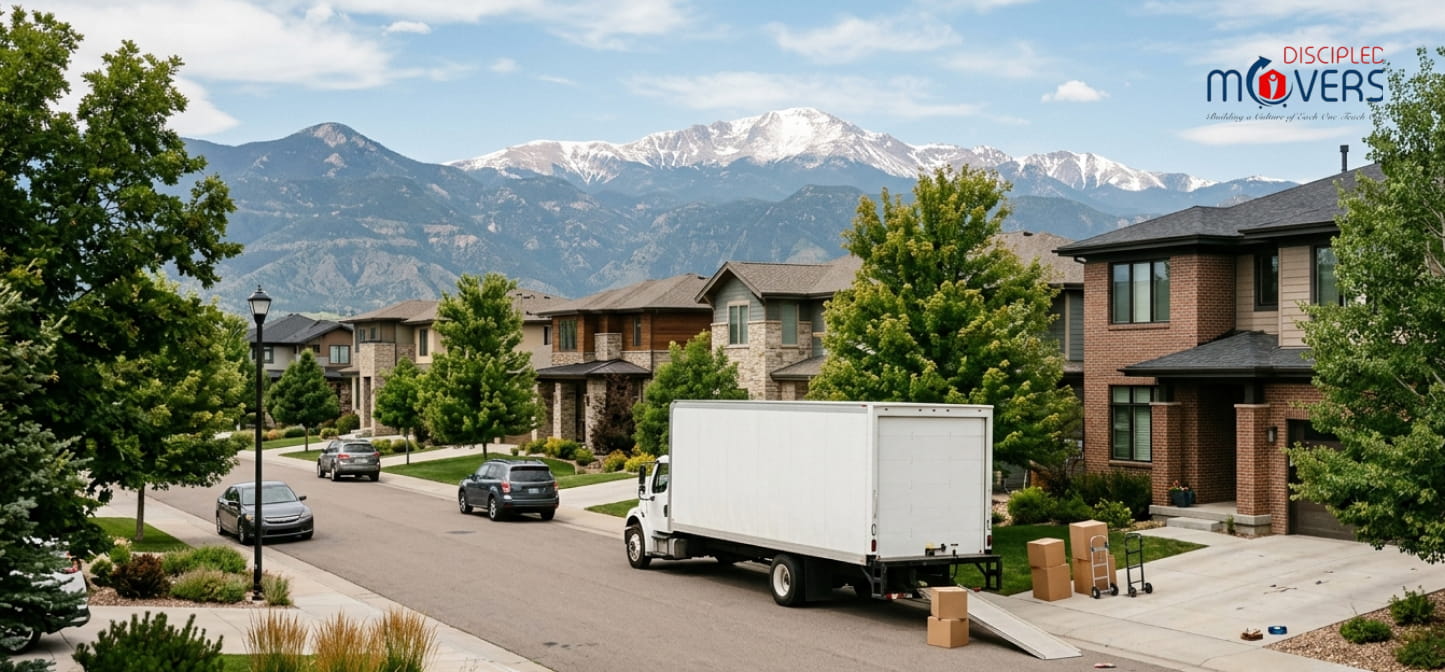
How Much Do Movers Cost in Denver in 2026?
Local moving costs in Denver for 2026 typically range from $140 to $220 per hour for a professional team of two movers and a truck. For a standard one-bedroom apartment, the total bill usually falls between $600 and $1,100, while a larger three-bedroom home can cost anywhere from $1,800 to $3,500, depending on the volume of items and the distance between locations. These figures reflect current labor rates and fuel prices in the Colorado market.
This guide, compiled by the experts at Discipled Movers, provides a detailed look at the financial requirements for relocating within the Mile High City. By examining specific labor rates, additional fees, and the variables that change a final bill, residents can plan a budget with high accuracy. Years of observing the local logistics industry indicate that seasonal demand and Denver’s unique geography play significant roles in the final price of any move.
Estimated Moving Expenses by Home Size
The physical size of a residence serves as the primary predictor for a Denver moving cost estimate. More rooms mean more furniture, more boxes, and a longer duration for loading and unloading. Most local moving services in Denver calculate costs based on a combination of crew size and the number of hours required to complete the task.
A report from Move.org suggests that moving a three-bedroom house takes approximately 7 to 10 hours of labor. In Denver, where traffic congestion on Interstate 25 or the narrow streets of neighborhoods like Capitol Hill can add time, those hours often lean toward the higher end of the scale.
| Residence Size | Number of Movers | Estimated Labor Hours | Estimated Total Cost |
|---|---|---|---|
| Studio Apartment | 2 Movers | 3 to 5 hours | $450 to $850 |
| 1 Bedroom Home | 2 Movers | 4 to 6 hours | $600 to $1,100 |
| 2 Bedroom Home | 3 Movers | 6 to 9 hours | $1,200 to $2,100 |
| 3 Bedroom Home | 4 Movers | 8 to 12 hours | $1,800 to $3,500 |
| 4+ Bedroom Home | 4 to 5 Movers | 12+ hours | $3,500 to $5,500+ |
Bonus Tip: Residents should group all small items and loose belongings into uniform boxes before the crew arrives. This reduces the number of trips to the truck and can lower the final bill by hundreds of dollars in labor time.
Standard Movers’ Hourly Rate in Denver
The movers’ hourly rate in Denver covers the professional labor, the use of a fully equipped moving truck, and basic equipment like dollies and moving blankets. In 2026, the baseline for a two-person crew is approximately $150 per hour. Adding a third mover generally increases the rate to about $190 to $210 per hour.
According to data from the U.S. Bureau of Labor Statistics, labor costs in the transportation and warehousing sector have remained steady but high in the Mountain West region. This stability means that while prices are not skyrocketing, they remain firm because of the high cost of living in Denver. Most companies also enforce a three-hour minimum charge to cover the operational costs of deploying a vehicle and crew.
Factors Affecting Moving Costs in Denver
Distance remains a major influence on the final price. While local moves within 50 miles are usually charged hourly, moves that cross city lines or move into the foothills often include travel fees. These fees compensate for the fuel and time spent driving from the warehouse to the origin and from the destination back to the shop.
Beyond geography, the time of year significantly changes the average cost of movers in Denver. Demand peaks from late May through early September when families move during school breaks. During this window, hourly rates can rise by 20% or more. Choosing a date in the middle of the week or during the winter months often results in lower rates and more flexible scheduling.
In addition to timing, physical obstacles impact the labor required. Movers often charge additional fees for long carries, which occur when the truck cannot park within a certain distance of the front door. Multi-story buildings without elevators also lead to higher costs because the crew must exert more physical effort and take more time to move heavy furniture up or down stairs.
Bonus Tip: To minimize costs, residents can reserve a parking space directly in front of their building using a Denver street occupancy permit. This ensures the truck is as close as possible, preventing long carry fees and speeding up the entire process.
Expenses for Commercial Moving Services
Relocating a business involves different logistical requirements than a residential move. A commercial moving company often charges based on the complexity of the equipment and the need for specialized handling of electronics or heavy machinery. Office moves are frequently performed after hours or on weekends to minimize business disruption, which can lead to higher labor rates due to overtime pay.
In Denver, commercial moves usually require a detailed site visit for an accurate quote. The presence of cubicles that need disassembly, server racks that require careful transport, and large conference tables all increase the time and manpower needed. Discipled Movers recommends that business owners expect to pay for a larger crew and specialized packing materials to ensure the safety of sensitive equipment.

Services Included in Local Moving Packages
Whether a relocation is residential or commercial, most local moving services in Denver provide a set of standard offerings within their hourly rates. This usually includes the loading of all items, secure transportation, and the unloading of items into the designated rooms at the new location. Protective materials like floor runners and door jamb protectors are also common inclusions to prevent damage to the property.
Additional costs arise for services like full-service packing. If the crew packs all the boxes, the cost of materials such as tape, bubble wrap, and specialized dish barrels will be added to the invoice. Some companies also offer crating for high-value items like artwork or antiques, which is a separate line item on the bill.
Things to Consider Before Making a Decision
Before selecting a provider, it is wise to verify their credentials and insurance coverage. Colorado law requires household goods movers to register with the Public Utilities Commission. Checking for a valid PUC number ensures the company operates legally within the state.
Liability coverage is another essential element. Basic valuation is usually included for free, but it only pays out a small amount per pound for damaged items. For expensive furniture or electronics, purchasing full value protection provides more security. A comparison of quotes should include a review of these insurance options to understand the level of protection provided.
Property access must be evaluated for both the current home and the new one. If a moving truck cannot fit under low-hanging trees or into a tight alleyway, a smaller shuttle truck might be required. This adds a significant transfer fee to the total cost because the items must be moved twice.
Common Questions About Denver Moving Prices
People often wonder if they should tip their movers. While not mandatory, a tip of $5 to $10 per mover for each hour worked is standard for good service in the Denver area. Providing water or snacks is also a common gesture of appreciation for the physical labor involved.
Another frequent concern is the accuracy of the initial estimate. A binding estimate guarantees the total cost based on the inventory provided, while a non-binding estimate can change if the move takes longer than expected. Providing an exhaustive list of all items, including those in the attic or garage, helps ensure the Denver moving cost estimate stays as close to the final bill as possible.
Does the weather in Denver affect the price?
Snow or heavy rain can slow down a move, but most companies do not charge extra specifically for weather. However, since local moves are hourly, any delays caused by slick roads or the need to clear snow will naturally increase the labor time and the final cost.
Are there hidden fees for heavy items?
Items such as pianos, safes, or large gym equipment often carry a “heavy item” surcharge. These pieces require specialized equipment and sometimes additional personnel to move safely. It is important to disclose these items during the quoting process to avoid surprise charges on moving day.
Is insurance included in the hourly rate?
Standard moving quotes include basic carrier liability, which typically covers 60 cents per pound per article. This is often insufficient for high-value goods. Residents should ask about full-value protection options if they want the mover to be responsible for the replacement value of damaged items.
How far in advance should a Denver move be booked?
For a move during the peak summer season, booking four to six weeks in advance is recommended. For off-peak moves during the winter or mid-week, two to three weeks is usually sufficient to secure a preferred date.
Can movers refuse to move certain items?
Yes, professional crews generally do not transport hazardous materials, including propane tanks, paint, cleaning chemicals, or ammunition. Perishable food and living plants may also be restricted depending on the distance and the company’s policies.
Summary of Denver Moving Costs
Predicting the cost of local moving services in Denver requires a clear understanding of home inventory and the specific labor rates of 2026. With average hourly rates between $140 and $220, the total investment depends heavily on preparation and timing. Discipled Movers suggests that planning for extra time due to Denver traffic and potential weather changes will create a more realistic budget. Evaluating quotes based on the reputation of the commercial moving company or residential service ensures that the value received matches the price paid. Every resident should weigh the convenience of professional labor against the specific logistical hurdles of their particular move to make the most informed financial choice.
Contact Discipled Movers for Information
Discipled Movers assists with various relocation needs across the Denver metro area. For those seeking clarity on logistics or scheduling, communication is available via email at repdiscipled@gmail.com or by calling (720) 409-1980. Accurate planning starts with professional guidance and a clear understanding of the local market conditions. Discipled Movers provides the necessary information to help residents prepare for a successful transition to a new home or office.
Sources
- U.S. Bureau of Labor Statistics – Provides data on national and regional labor costs and wage trends for transportation workers.
- Move.org – A resource for moving industry averages, cost calculators, and logistical planning advice.
- United States Census Bureau – Offers migration and population data that influences moving demand in specific geographic regions like Denver.
- Forbes Advisor – Lists specific cost benchmarks and service expectations for moving companies in the Denver area.