
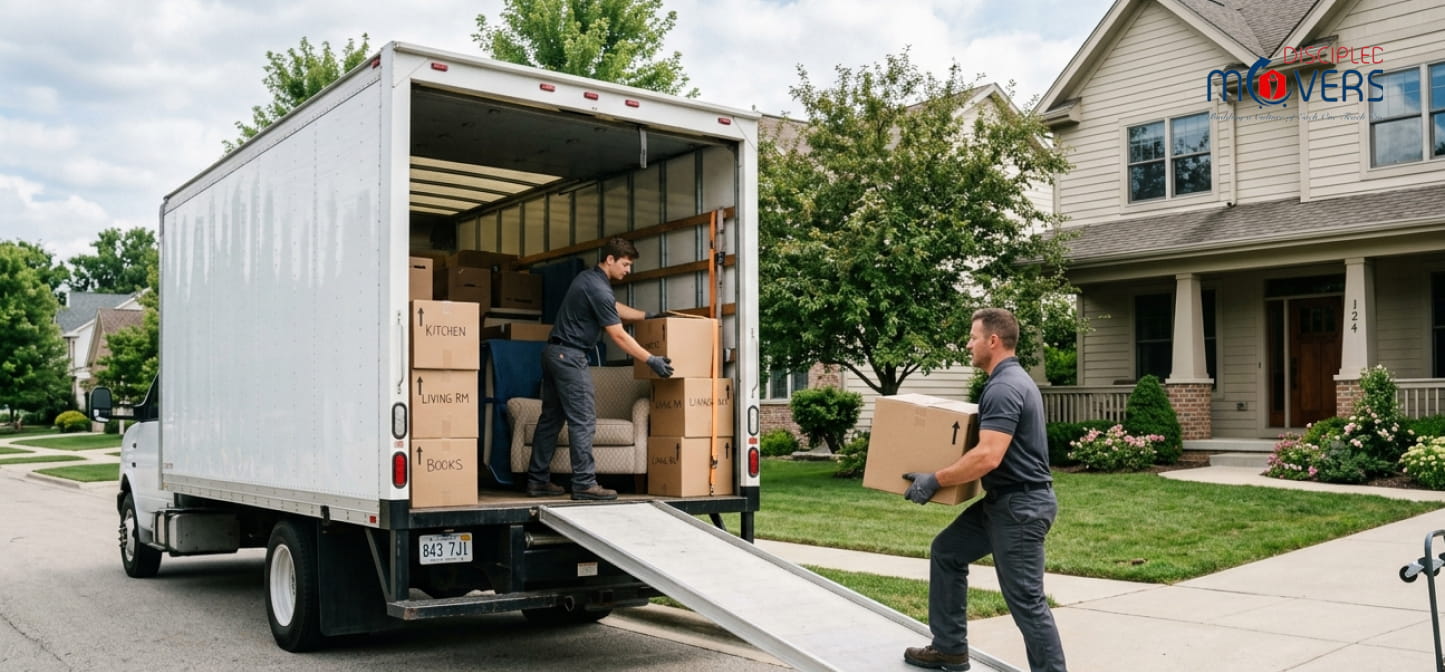
How Much Do Moving Companies Charge
Summarize with
The typical cost of hiring movers for a local relocation ranges from $800 to $2,500. This pricing generally covers a standard two or three-bedroom home and includes labor and transportation. For larger homes or relocations across state lines, costs increase significantly. Long-distance relocations usually cost between $2,000 and $10,000, depending on the total weight of the shipment and the mileage between the two locations.
The average cost of moving companies varies based on the specific services required and the time of year. A moving company’s price estimate depends on the volume of inventory and the complexity of the move. Professional moving services provided by Discipled Movers follow industry standards to ensure accuracy in these calculations. This guide examines the different pricing structures and additional fees associated with professional relocation services.
General Pricing for Local Relocations
Local moves are almost always billed using a mover’s hourly rate. Most companies charge for a minimum number of hours, often three or four, to cover the basic expenses of bringing a crew and a truck to the site. The hourly rate typically includes two movers and a fully equipped moving truck. Adding more laborers increases the cost per hour for moving services but usually reduces the total time required to complete the job.
According to data from Forbes Home, the national average hourly rate for two movers and a truck stays between $90 and $150. These rates fluctuate based on the cost of living in specific metropolitan areas. In high-demand cities, the price might exceed $200 per hour during peak summer months.
Labor costs are not the only expense for local moves. Many businesses apply a travel fee to cover the time spent driving from the warehouse to the origin and from the destination back to the warehouse. This fee often equals one hour of labor at the standard hourly rate.
Long Distance Moving Costs
Unlike local moves, long-distance movers calculate prices based on the weight of the items and the distance traveled. Federal law requires interstate movers to provide a written estimate based on these factors. Some companies use cubic feet instead of weight, but weight-based pricing remains the most common method for determining final costs.
Data published by Move.org indicates that the average cost for an interstate move of 1,000 miles is approximately $4,890. This price assumes a shipment weight of about 7,500 pounds, which is common for a three-bedroom home.
Estimates from Discipled Movers suggest that planning for long-distance relocations requires understanding the difference between binding and non-binding estimates. A binding estimate guarantees the total cost based on the inventory list, while a non-binding estimate can change if the final weight differs from the initial projection.

Home Size and Estimated Moving Expenses
The size of the residence is the primary indicator of how much a move will cost. More rooms mean more furniture and more boxes, which leads to longer labor hours or higher shipment weight. The following table provides a side-by-side comparison of typical costs based on home size:
| Residence Size | Typical Local Cost (Hourly) | Typical Long-Distance Cost (Weight/Distance) |
|---|---|---|
| Studio Apartment | $350 – $600 | $1,200 – $3,000 |
| 1 Bedroom Home | $500 – $900 | $1,800 – $4,200 |
| 2 Bedroom Home | $900 – $1,600 | $2,500 – $6,000 |
| 3 Bedroom Home | $1,500 – $2,800 | $4,500 – $9,000 |
| 4+ Bedroom Home | $2,400 – $4,500+ | $7,000 – $12,000+ |
Bonus Tip: Reducing the volume of items before requesting a quote is the most effective way to lower the price. Selling or donating heavy furniture and unused items can save hundreds of dollars on a long-distance moving company price estimate.
Professional Packing Services and Materials
Many people choose to hire professional packing services to save time and reduce the risk of damage. These services are typically billed hourly for local moves or as a flat fee per box for long-distance moves. Professional packers bring their own supplies, including specialized boxes for dishes, wardrobes, and electronics.
Hiring professionals to pack a two-bedroom home usually costs between $300 and $700 plus the cost of materials. Packing materials like bubble wrap, tape, and sturdy boxes add another $100 to $300 to the total bill. A report from Moving.com notes that full packing services can double the labor cost of a move but offer a higher level of protection for fragile items.
Additional Fees and Surcharges
Several factors can cause the price of a move to increase beyond the initial quote. Transparency regarding the layout of both the old and new homes helps avoid unexpected charges on moving day.
- Stair Fees: Moving heavy items up or down multiple flights of stairs takes more time and physical effort. Some companies charge a flat fee per flight of stairs.
- Long Carry Fees: If the moving truck cannot park close to the entrance of the home, companies charge a long carry fee. This typically applies if the distance exceeds 75 to 100 feet.
- Elevator Fees: Using elevators in high-rise buildings requires extra coordination and often increases the time needed for the move.
- Bulky Item Fees: Pianos, pool tables, safes, and hot tubs require specialized equipment and extra manpower. These items almost always carry a separate surcharge.
- Valuation Coverage: Basic liability coverage is usually included at no extra cost, but it only pays about $0.60 per pound for damaged items. Full value protection requires an additional premium.
Experience at Discipled Movers indicates that providing a video walkthrough or a detailed inventory list helps prevent these surprise fees by allowing the estimator to see potential obstacles.
Things to Consider Before Making a Decision
Choosing the right moving service involves looking at more than just the bottom line. The cheapest estimate is not always the most cost-effective if it results in damaged items or hidden fees later.
Check for proper licensing and insurance before signing any contract. For interstate moves, verify the company’s USDOT number on the Federal Motor Carrier Safety Administration website. This ensures the business follows federal safety and consumer protection regulations.
Consider the timing of the move. Prices are highest during the summer, at the end of the month, and on weekends. Scheduling a relocation for a Tuesday or Wednesday in the middle of the month often results in lower rates and better availability of experienced crews.
Bonus Tip: Ask about the company’s cancellation policy. Some businesses require a non-refundable deposit, while others allow changes up to 48 hours before the scheduled date. Knowing this policy protects your money if your closing date shifts or your plans change.
Common Questions About Moving Charges
Is there a difference between an estimate and a quote?
An estimate is a rough calculation of costs, while a quote is a more formal offer. Most reputable companies provide a moving company price estimate after a physical or virtual survey of the home. Always request the final quote in writing to ensure the price remains consistent on moving day.
Do movers expect a tip?
Tipping is not mandatory but is customary for good service. A standard tip is $5 to $10 per mover for every hour worked. Alternatively, some people provide a flat tip of $20 to $50 per person, depending on the difficulty of the move and the quality of the service.
Why do summer moves cost more?
Moving demand peaks between May and September. During this period, moving companies often operate at full capacity. Higher demand allows companies to charge premium rates, and limited availability means last-minute bookings are much more expensive.
Common Moving Inquiries
How long does a local move take?
A studio or one-bedroom apartment usually takes 3 to 5 hours. A three-bedroom home often requires 7 to 10 hours of labor. These times include loading the truck, driving to the new location, and unloading items into the correct rooms.
Are packing supplies included in the hourly rate?
Most movers’ hourly rate quotes do not include packing supplies like boxes and tape. These items are billed based on actual usage. Some companies offer discounted bundles for customers who choose to pack their own belongings.
What is the most expensive part of a move?
For local moves, the labor hours are the largest expense. For long-distance moves, the transportation costs and fuel surcharges usually make up the bulk of the bill. Special handling for fragile or heavy items also adds a high cost to the total.
Can I save money by helping the movers?
Professional movers usually prefer that customers stay out of the way for safety and insurance reasons. You can save more money by having everything boxed, labeled, and ready to go before the crew arrives. This reduces the total labor hours billed.
Summary of Moving Cost Factors
The total price for professional moving services depends on a combination of labor, distance, and item volume. Local moves rely on an hourly rate, while long-distance moves focus on weight and mileage. Additional services like professional packing and specialized handling for heavy items will increase the total investment.
Evaluate each estimate carefully by checking for hidden fees like stair charges or long carry surcharges. Verify that the company is fully insured and licensed to operate in your area. Planning the move during off-peak times and reducing the number of items to be moved are the most effective ways to manage the budget. Always get multiple written estimates to compare services and pricing structures before making a final commitment.
Moving Services Information
Finding a reliable partner for relocation simplifies the transition to a new home. Discipled Movers provides clear pricing and professional assistance for local and residential moves. For more details on scheduling or to receive a specific estimate for your upcoming relocation, contact the office directly. Reach the team at (720) 409-1980 or send an email to repdiscipled@gmail.com to discuss your specific requirements and get the information needed for a successful move.
Sources
- Forbes Home – Detailed breakdown of national average costs for local and long-distance moving services.
- Move.org – Market data and research regarding average moving prices based on home size and distance.
- Moving.com – Comprehensive guide on how moving companies calculate estimates and common additional fees.
- Federal Motor Carrier Safety Administration – Government resource for verifying moving company credentials and understanding consumer rights during interstate moves.