
When Should You Start Packing for a Move? (Timeline Guide)
Summarize with
The ideal time to start packing for a move is eight weeks before the scheduled moving day. This timeline provides enough space to sort through belongings, secure supplies, and organize logistics without the stress of last-minute rushing. For smaller apartments, a six-week window may suffice, but larger family homes often require the full two months to manage the volume of items safely and efficiently.
Establishing a clear moving packing timeline prevents the physical and mental exhaustion often associated with relocation. Starting early allows for a methodical approach to decluttering, which reduces the total volume of goods to transport and can lower overall costs. Discipled Movers provides this guide based on years of field experience helping residents move their lives from one home to another.
Eight Weeks to Success
The first stage of the packing schedule for moving involves heavy preparation rather than putting items into boxes. This is the period for assessment and high-level organization. Homeowners should walk through every room, including storage areas like attics or basements, to determine what will make the move.
Inventory and Supply Gathering
Create a comprehensive list of all items. This inventory helps when getting quotes from movers with packing services in Denver. Once the scope is clear, gather high-quality packing materials. Using sturdy boxes, professional-grade tape, and ample cushioning prevents damage during transit. Data from Zillow suggests that packing a standard three-bedroom home can take between 30 and 60 hours of active labor, so spreading this over two months keeps the workload manageable.
Decluttering the Home
The most effective way to simplify a move is to move less stuff. Categorize items into four groups: keep, sell, donate, and discard. Reducing the load at the eight-week mark ensures that no energy is wasted packing things that no longer serve a purpose. This step is also a good time to research packing and moving services in Denver to compare service levels and availability.
Bonus Tip: Take photos of electronic setups before unplugging them. This makes reassembling televisions and computer stations much faster in the new house.
Six Weeks Before Moving Day
By the six-week mark, the transition from planning to action begins. This is when to start packing for a move in a literal sense. Focus on items that are not used on a daily or even weekly basis.
Packing Non-essential Items
Start with seasonal items. If it is summer, pack all winter clothing, holiday decorations, and heavy blankets. Books, framed photos, and wall art can also go into boxes now. Since these items will stay packed for several weeks, ensure they are wrapped well to prevent dust accumulation or moisture damage.
Room-by-room Strategy
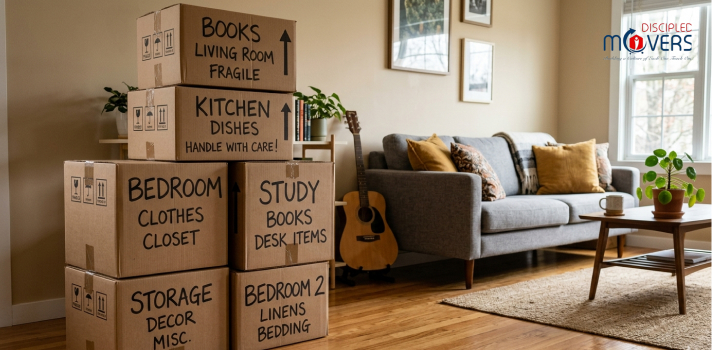
Pick one room to serve as a packing station. As boxes are filled and sealed, stack them here to keep the rest of the living space functional. Using a consistent labeling system, such as color-coding by room or numbering boxes, helps maintain order. According to the U.S. Census Bureau, millions of Americans relocate annually, and those who use a room-by-room method report significantly lower stress levels during the unpacking process.
The Four-Week Active Packing Phase
With one month remaining, the pace of the moving packing checklist increases. This phase covers the majority of the household contents. As the move approaches, the effort required for specialized spaces like the kitchen and common areas becomes more apparent.
Managing the Kitchen and Common Areas
The kitchen is often the most difficult room to pack because of the fragile items and odd shapes. Pack specialized appliances like bread makers or air fryers first. Use plenty of packing paper for dishes and wrap them vertically like records rather than stacking them flat, which makes them less likely to break under pressure.
Identifying Specialized Needs
If the home contains heavy or delicate items like pianos, pool tables, or high-end art, this is the time to confirm arrangements with packing services in Denver, CO. Specialized items require specific techniques and equipment that standard boxes cannot provide.
Bonus Tip: Use soft items like towels and thick socks as padding for fragile glassware. This saves money on bubble wrap and packs two things at once.
Two Weeks and Counting
The final two weeks involve packing everyday items. At this stage, the home will feel significantly emptier. Focus on the closets, remaining linens, and most of the bathroom contents.
| Timeframe | Primary Focus | Specific Tasks |
|---|---|---|
| 8 Weeks Out | Logistics | Research movers, declutter, buy supplies |
| 6 Weeks Out | Off-Season Items | Pack holiday decor, books, and extra linens |
| 4 Weeks Out | Main Household | Pack kitchen, closets, and living areas |
| 2 Weeks Out | Essentials | Pack everyday clothes, bathroom items |
| 1 Week Out | Final Prep | Clean, pack the essentials kit, and disassemble furniture |
The Essentials Kit
Prepare a specific box or suitcase for the first 24 hours in the new home. This should include toiletries, a change of clothes, basic tools, chargers, and important documents. Keeping this separate ensures that there is no need to dig through fifty boxes just to find a toothbrush or a screwdriver on the first night.
Decision Factors for Moving Schedules
Before deciding how early to pack for moving, consider several variables that might alter the standard eight-week timeline. Every relocation is different, and personal circumstances dictate the necessary lead time.
- Size of the Residence: A studio apartment might only require three weeks of preparation, while a five-bedroom estate often needs ten to twelve weeks.
- Professional Assistance: Hiring movers with packing services in Denver can condense the timeline significantly, as professional crews can often pack an entire home in one or two days.
- Specialty Items: Large collections, workshops, or home gyms require more time for disassembly and specialized crating.
- Work Schedule: Those working full-time jobs may only have weekends to pack, necessitating an earlier start date to avoid burnout.
Discipled Movers often see that clients who underestimate the time required for the kitchen and garage face the most difficulty in the final 48 hours. While these factors influence your schedule, you may still have specific questions regarding the labor and preparation involved.

Common Questions About Moving Timelines
How long does packing take for a typical family? For a three-bedroom home, expect to spend about 40 to 50 hours. This does not include the time spent decluttering or researching logistics. Breaking this down into two hours a day over several weeks is much more manageable than trying to do it all in one weekend.
Can you pack too early? Generally, no, as long as the items packed are truly non-essential. Packing a winter coat in July will not cause any daily issues. However, packing the coffee maker a month early might lead to unnecessary frustration. The secret is identifying what is truly needed for daily life.
Frequently Asked Questions
Is it better to pack one room at a time or by item type?
Packing one room at a time is usually more efficient. It keeps related items together and makes the unpacking process much faster because boxes can be dropped directly into the correct room at the new location.
How many boxes will a standard move require?
A medium-sized home usually requires 60 to 80 boxes of various sizes. It is always better to have ten extra boxes than to run out on the final night.
Should drawers be emptied before moving furniture?
Most furniture is not designed to be moved while full. The extra weight can stress the joints of the piece, and items sliding around inside can cause damage. It is best to empty drawers and pack the contents separately.
What items should never be packed in a moving truck?
Do not pack hazardous materials like propane tanks, paint thinner, or aerosol cans. Also, keep high-value items like jewelry, passports, and birth certificates with you in your personal vehicle.
Summary of Professional Moving Advice
Starting the packing process eight weeks in advance provides the best balance of organization and ease. By breaking the task into phases, decluttering, packing non-essentials, and finally tackling daily items, the process remains orderly. Success depends on having the right supplies and maintaining a consistent schedule. Evaluate the specific needs of the household, such as the total square footage and the presence of fragile items, to adjust this timeline as needed. Taking a methodical approach ensures that belongings arrive safely and the transition to a new home is a positive experience.
Reach Out for Moving Assistance
Planning a move requires attention to detail and significant physical effort. For those who prefer professional support, Discipled Movers offers comprehensive solutions to handle the heavy lifting and logistical planning. Whether the move is local or requires more complex coordination, the team is ready to help. Contact Discipled Movers at (720) 409-1980 or via email at repdiscipled@gmail.com to discuss specific requirements and receive a detailed estimate for your upcoming relocation.
Sources
- Zillow – A resource providing data on the average time required to pack and move different sizes of homes.
- U.S. Census Bureau – Official government data regarding national moving trends and relocation statistics in the United States.
- Architectural Digest – A leading authority on home management that offers professional timelines and organizational tips for residential moves.