
How Much Does It Cost to Move a Mobile Home
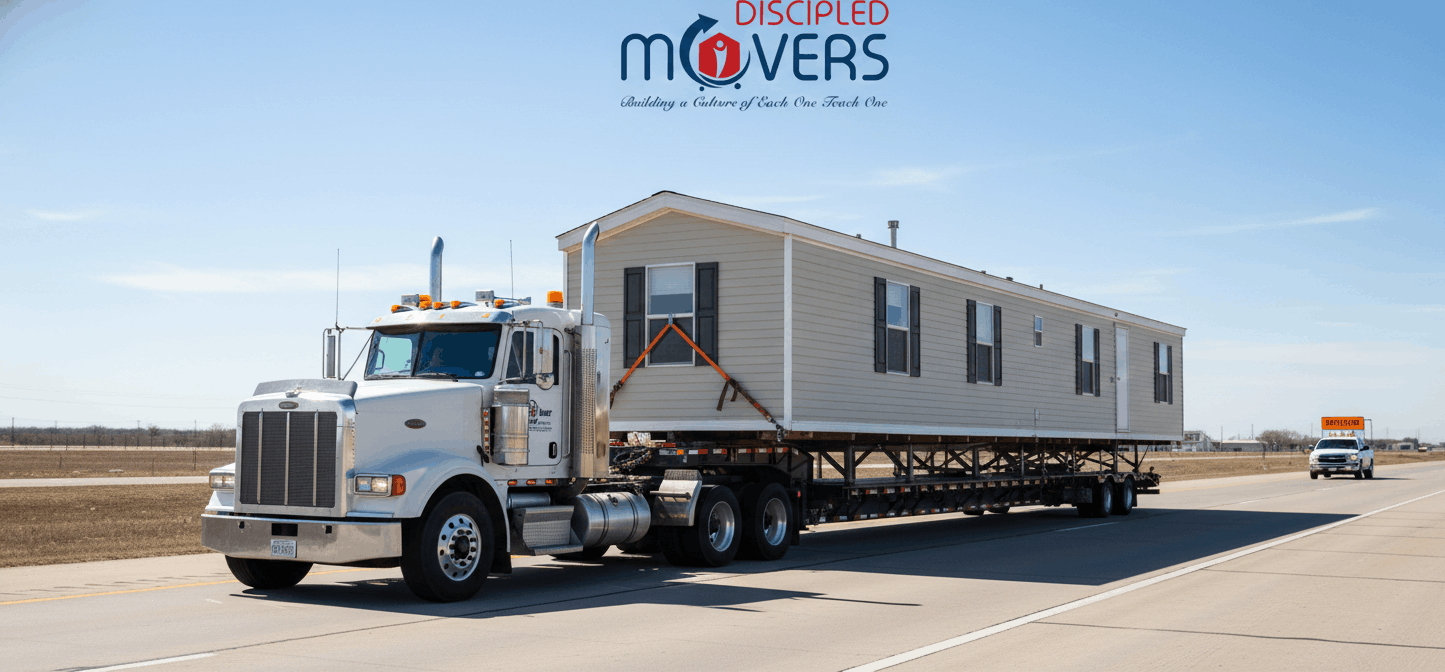
Moving a manufactured home generally costs between $1,000 and $20,000. In a simple transport-only move where the owner handles all preparation and setup, prices usually range from $1,000 to $5,000 for a single-wide unit. Full-service moves, which include disconnecting utilities, removing skirting, and re-installing everything at the new location, typically cost between $3,000 and $8,000 for a single-wide and $10,000 to $20,000 or more for a double-wide home.
Discipled Movers understands that these figures fluctuate based on distance, home size, and the specific labor required at both the old and new sites. This guide provides a detailed look at the financial requirements and logistical considerations necessary for a successful manufactured home relocation. By examining every expense from permit fees to foundation setup, homeowners can plan a realistic budget for their move.
Primary Factors Affecting Total Moving Expenses
The total price of moving a manufactured home is rarely a flat fee. Several variables determine how many hours of labor and what type of equipment the job requires. Understanding these factors helps in predicting whether a quote will fall on the lower or higher end of the spectrum.
Distance and Transport Logistics
Travel distance is often the most significant variable. According to data provided by Moving.com, transport-only moves usually involve a base fee plus a per-mile rate that can range from $5 to $15 per mile. Long-distance moves require more fuel, more driver hours, and potentially overnight stays for the crew. If the route involves narrow roads, low bridges, or steep grades, the moving company may need to take a longer path, increasing the mileage.
Size and Type of Home
A single-wide home is much easier to move than a double-wide or triple-wide. Single-wide units are moved as one piece, whereas double-wide homes must be separated into two sections and transported individually. This effectively doubles the transport costs and significantly increases the labor required for disassembly and re-assembly. Triple-wide homes are even more complex and expensive.
Structural Weight and Materials
The age and construction materials of the home also matter. Modern manufactured homes built with heavy drywall and high-end finishes weigh more than older models built with lighter materials. Heavier units require more powerful towing vehicles and may incur higher fuel surcharges. Additionally, the condition of the chassis and axles is critical. If the home has been sitting in one spot for decades, the tires and axles may need replacement before the unit is even moved.
Estimated Price Ranges for Different Service Levels
The level of service a homeowner chooses will drastically change the final bill. Some owners prefer to do the “dirty work” themselves to save money, while others prefer a turnkey solution. The price ranges below reflect these different service levels.
| Service Type | Single-Wide Estimate | Double-Wide Estimate |
|---|---|---|
| Transport Only (Hook and Go) | $1,000 – $5,000 | $2,000 – $13,000 |
| Partial Service (Transport + Setup) | $3,000 – $6,000 | $7,000 – $15,000 |
| Full-Service (Turnkey Relocation) | $5,000 – $8,000 | $10,000 – $20,000+ |
Bonus Tip: Before hiring any company, verify if the quote includes the “exit” and “entry” labor. Some companies only quote the price to pull the home from point A to point B, leaving the owner responsible for stabilizing the home on its new foundation.
Mandatory Permits and Legal Fees
Moving a large structure on public roads requires legal permission from several government agencies. These costs are often overlooked but are non-negotiable.
Transportation Permits
Each state and sometimes individual counties require permits to move oversized loads. If the home crosses state lines, the moving company must obtain permits for every state the home enters. A report from Bankrate suggests that permit costs typically range from $100 to $500 depending on local regulations.
Pilot Cars and Police Escorts
Depending on the width of the home and the laws of the states involved, the move may require escort vehicles. These “pilot cars” warn other drivers of the oversized load. In some jurisdictions, a police escort is mandatory for certain sections of the highway or when moving through busy city centers. Escort services usually charge by the mile or by the hour, adding several hundred or even thousands of dollars to the total.
Local Zoning and Setup Permits
The new destination also has its own set of rules. Local building departments often require a permit to install a manufactured home on a new lot. This ensures the home meets local safety standards and is properly connected to sewer and water systems. Discipled Movers recommends checking local zoning laws early in the process to avoid buying land where a manufactured home cannot be legally placed.
Site Preparation and Installation Costs
The move is not finished when the home arrives at the new lot. Getting the unit ready for occupancy involves significant labor and material costs.
Foundation and Concrete Work
The home must sit on a stable foundation. This could be a simple gravel pad, concrete piers, or a full basement. A study by HomeAdvisor indicates that foundation costs can vary wildly, with simple pier installations costing around $1,000 and full slabs costing much more. Proper leveling is the most important part of this stage. An uneven home will experience cracked walls, sticking doors, and plumbing leaks over time.
Utility Connections
Connecting the home to water, electricity, and sewage is a job for licensed professionals. Expect to pay an electrician and a plumber for their time. If the new lot does not already have a septic system or a well, these installations will cost thousands of dollars before the home even arrives.
Skirting and Exterior Additions
Once the home is leveled and connected, skirting must be installed around the base to protect the plumbing and improve energy efficiency. If the home had a porch, deck, or carport at its previous location, these structures usually cannot be moved while attached to the unit. They must be dismantled and rebuilt at the new site.
Things to Consider Before Making a Decision
Before signing a contract or buying a used manufactured home with the intent to move it, homeowners should evaluate several practical realities.
- The Age of the Home: Many states have strict laws about moving older homes. Some jurisdictions do not allow the transport of homes built before 1976 because they do not meet HUD safety codes.
- Structural Integrity: If the home has significant water damage or a rusted frame, it may not survive the stress of a highway move. A professional inspection is a small price to pay to avoid a total loss.
- The Moving Route: Trees, power lines, and sharp turns can make certain destinations inaccessible for a manufactured home. Always have the mover scout the final mile of the route.
- Tires and Axles: If the home has been stationary for years, the tires are likely dry-rotted. Buying new tires and checking the bearings is a necessary expense for a safe trip.
Bonus Tip: Take photos of the interior and exterior of the home before the move. This provides evidence for insurance claims if any structural shifting or glass breakage occurs during transport.
Common Questions About Mobile Home Moving
People often wonder if they can save money by doing parts of the move themselves. While some tasks like cleaning and packing are easy, the technical labor of relocation is best left to experts.
Can I move a mobile home myself? Most states require a licensed and insured professional to transport manufactured homes. The specialized equipment and permits needed make this impossible for a DIY project.
How long does the moving process take? The physical move might only take one day, but the preparation and setup often take one to two weeks. Disconnecting utilities and removing skirting takes time, as does the re-leveling and inspection process at the new site.
Will my insurance cover the move? Standard homeowner insurance policies often do not cover a home while it is in transit. Owners usually need to purchase a separate “inland marine” policy or verify that the moving company has adequate cargo insurance to cover the full value of the home.
Frequently Asked Questions
What is the cheapest way to move a mobile home?
The most affordable method is a transport-only move where the homeowner handles all the “wet” and “dry” work. This includes disconnecting all utilities, removing the skirting, taking down any decks, and preparing the interior for travel. However, the owner must also be ready to handle the setup at the new location.
Does the price change if the home is on a permanent foundation?
Yes. If a home is attached to a permanent foundation, it must be legally and physically “de-titled” and removed from that foundation before it can be moved. This process is more labor-intensive and expensive than moving a home that is simply blocked and tied down.
Are there extra fees for moving a double-wide?
Double-wide moves are significantly more expensive because the home must be split into two sections. This requires specialized equipment to seal the open sides for transport and professional crews to “marry” the two halves back together at the destination, which includes making the roof and floor seams watertight.
How much do escort vehicles cost?
Escort vehicles or pilot cars typically cost between $1.50 and $3.00 per mile per car. Some moves require two cars, one in front and one in back. There may also be a daily minimum fee for the drivers involved.
Can I leave my furniture inside during the move?
While some furniture can remain, it must be properly secured. Heavy items should be placed over the axles to maintain balance. Professional movers generally recommend removing heavy appliances and fragile items to prevent structural damage caused by road vibrations.
Moving Strategy Summary
Relocating a manufactured home is a major financial and logistical undertaking. The base price of $1,000 to $5,000 for a simple single-wide move quickly grows when adding permits, pilot cars, and site preparation. Homeowners should expect a total bill closer to $8,000 for a single-wide and $15,000 to $20,000 for a double-wide when all factors are included. Success depends on thorough research into local permits, a clear understanding of the home’s structural health, and a realistic budget for professional setup at the new location. Always get a detailed, written estimate that breaks down exactly which services are included and which will be billed separately.
Professional Moving Assistance
For those needing expert guidance or a detailed quote for an upcoming relocation, reaching out to professionals is the best first step. Discipled Movers provides experienced logistics support for various moving needs. Contact the team at (720) 409-1980 or via email at repdiscipled@gmail.com to discuss specific project requirements and receive a clear estimate for your move.
Sources
- Moving.com – A comprehensive guide on the per-mile and total costs associated with manufactured home transport.
- Bankrate – An analysis of the legal fees, permits, and financial planning required for moving a mobile home.
- HomeAdvisor – Detailed data regarding labor costs for site preparation, foundation work, and full-service moving packages.